



Controller Stick Drift Repair in Southgate, MI
Why Is My Controller Moving on Its Own, and Can Stick Drift Be Fixed?
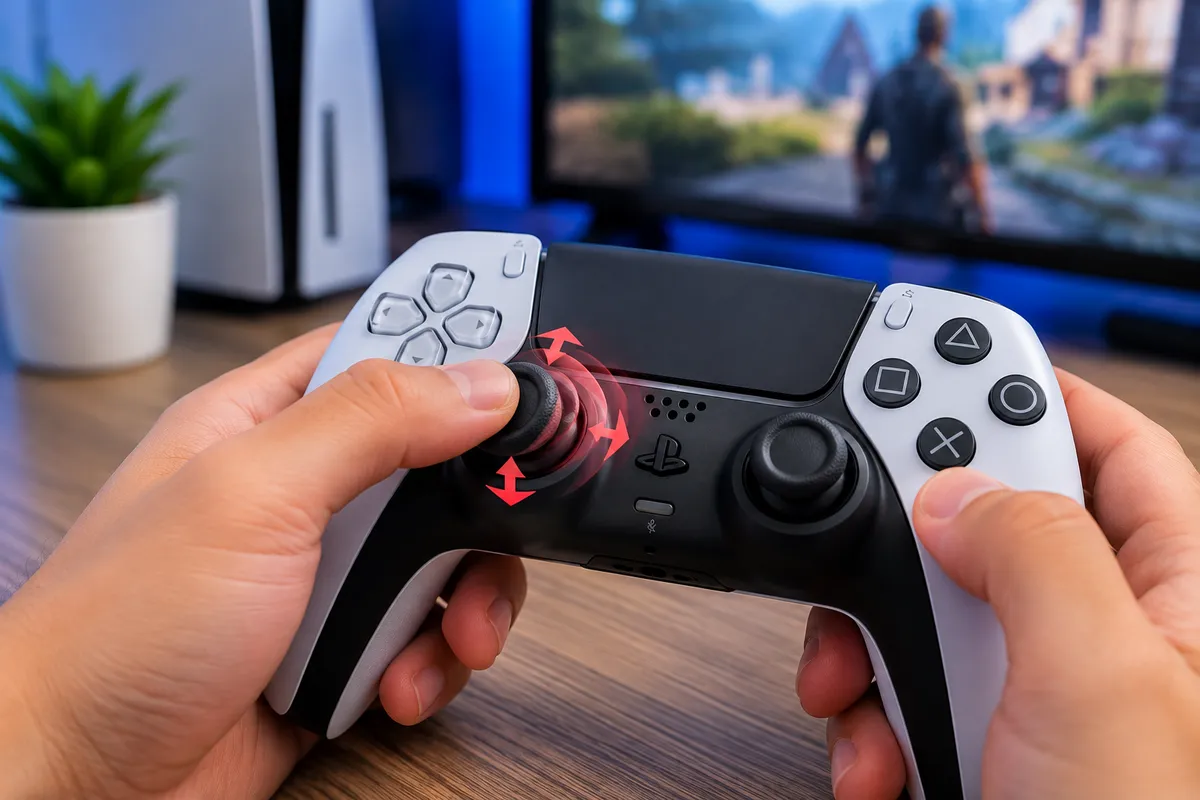
If a character, cursor, or menu keeps moving even when you are not touching the controller, the problem is commonly called stick drift. It happens when the controller sends movement input even though the analog stick is resting near its center position.
Stick drift can affect PlayStation, Xbox, Nintendo Switch, and other game controllers. Sometimes the cause is dirt or temporary calibration trouble. In other cases, the analog stick mechanism itself is worn and needs repair or replacement.
For gamers in Southgate, MI, Moe-Bile Repair provides game console repair services and can help determine whether a controller problem is caused by contamination, wear, impact damage, or another hardware issue.
What Is Controller Stick Drift?
Modern analog sticks use internal components to measure movement along horizontal and vertical axes. When the stick returns to the center, the controller should report little or no movement.
With stick drift, the reported position does not match the actual physical position. A game may read this as a small left, right, up, or down input even while your hands are off the controller.
The symptom can be constant or intermittent. Some controllers drift only in certain games or after the stick has been moved in one direction, while others move continuously as soon as the controller connects.
Why Does Stick Drift Happen?
Normal wear is one of the most common causes. Analog sticks contain small mechanical and electrical parts that move every time you play. Over time, contact surfaces can wear, springs can lose consistency, and the measured center point can change.
Dust, skin oils, or debris around the stick can also interfere with movement. Drops and impact damage may bend or shift internal parts. Liquid exposure can create corrosion or unstable electrical readings.
Software and calibration can sometimes make drift appear worse, but persistent movement across several games usually deserves hardware inspection.
Can a Dirty Controller Cause Drift?
Yes, contamination around the analog stick can sometimes create rough movement or inconsistent readings. If the stick feels sticky, does not return smoothly to center, or started acting up after dust or debris entered around the opening, cleaning may help.
The safe limit at home is basic exterior cleaning. Power the controller off, disconnect it, and use a clean dry cloth around the stick area. Avoid pouring liquid cleaners into the controller or forcing tools into the gap around the stick.
If contamination is inside the controller, proper disassembly and cleaning may be required. Aggressive home cleaning can damage small components or introduce moisture where it does not belong.
Could the Problem Be a Game Setting Instead?
Not every small movement means the controller is physically failing. Many games use a setting called a dead zone, which determines how far the stick must move before the game responds.
If the dead zone is set extremely low, small variations that would normally be ignored may become visible. Testing the controller in another game or system menu can help determine whether the behavior follows the controller.
A calibration or software update may also help in some cases. However, increasing the dead zone only hides a hardware problem if the internal stick mechanism is actually wearing out.
How Do You Know the Analog Stick Is Worn?
Persistent drift that returns after restarting, updating, and testing multiple games is a stronger sign of hardware wear. Other clues include a stick that feels loose, does not return evenly to center, or produces erratic movement rather than a consistent response.
The direction of drift can also matter. A controller that repeatedly moves left on its own may have wear concentrated in one part of the analog mechanism.
Physical testing helps separate a worn stick module from a software issue, damaged circuit board, or contamination problem.
Can Stick Drift Be Repaired?
In many cases, yes. The correct repair depends on what has failed. A controller with contamination may respond to proper internal cleaning. A worn analog module may need a component repair or replacement.
Some controllers use stick assemblies that are soldered to the circuit board, which means replacement requires careful electronic work rather than simply unplugging a part. The controller should also be tested afterward to make sure the repaired stick centers correctly and responds across its full range.
Repair makes the most sense when the rest of the controller is in good condition and the cost is reasonable compared with replacing it.
What About Nintendo Switch Joy-Con Drift?
Joy-Con controllers can develop the same basic symptom: characters move without input, menus scroll, or aiming shifts even while the stick is untouched.
Because Joy-Con units are compact, contamination, wear, impact damage, and internal component failure can all affect stick behavior. A temporary recalibration may help if the center point is slightly off, but repeated drift usually means the hardware deserves inspection.
If a Joy-Con also has charging, rail-connection, or button issues, those symptoms should be mentioned during diagnosis because more than one part may have been affected.
Can Drops or Liquid Damage Cause Drift?
Yes. A hard drop can damage the stick mechanism, circuit board, or housing around the control. Liquid can also reach the analog module and create corrosion or unstable readings.
If drift began immediately after impact or moisture exposure, that history is useful. It can change the repair approach and may explain why cleaning or calibration alone does not solve the problem.
Controllers showing unusual heat, battery swelling, or charging problems should not be repeatedly tested until the condition is understood.
Should You Keep Playing With a Drifting Controller?
Mild drift is not usually dangerous, but it can make games frustrating and can interfere with menus, aiming, movement, and text entry. Competitive or precision-heavy games can become especially difficult.
Compensating by pushing the stick harder or constantly snapping it back to center does not repair the underlying wear. Heavy force may accelerate damage.
If the drift is getting worse, repairing or replacing the controller is more practical than continuing to increase dead-zone settings until normal control becomes difficult.
How Technicians Diagnose Controller Drift
A technician can first confirm whether the unwanted movement is truly coming from the controller. Testing can show whether the stick returns to center, whether one axis is unstable, and whether input changes smoothly across the stick's range.
The controller can then be inspected for contamination, physical damage, worn components, liquid exposure, or problems with the board. If repair is appropriate, the affected component can be serviced and the controller tested again afterward.
This process is more reliable than assuming every drift problem needs the same part replaced.
Controller and Game Console Repair in Southgate, MI
A controller that moves on its own may have a calibration issue, contamination, mechanical wear, impact damage, or an internal electronic fault. The important step is identifying whether the problem can be corrected without unnecessary parts replacement.
Moe-Bile Repair provides game console repair services in Southgate, MI for major gaming systems. If a controller or console is behaving unpredictably, proper testing can help determine the most practical repair path.
Visit the Southgate location or contact Moe-Bile Repair to discuss controller drift or other gaming hardware symptoms.
