




Used iPhone Battery Health: What Percentage Is Enough?
How Much Battery Health Is Enough for a Used iPhone?
For most used-iPhone buyers, battery health in the high 80s or 90s is a comfortable range. An iPhone at 85% to 89% maximum capacity can still be a reasonable purchase if the price reflects its age and the battery performs normally. Once battery health approaches 80%, expect shorter runtime and factor a future battery replacement into the cost.
Battery health is only one part of evaluating a pre-owned iPhone. The model, age, charging behavior, repair history, software support, and overall condition matter too. Moe-Bile Repair in Southgate, MI offers quality used iPhones and other pre-owned devices that are inspected and tested before sale.
What Does iPhone Battery Health Actually Measure?
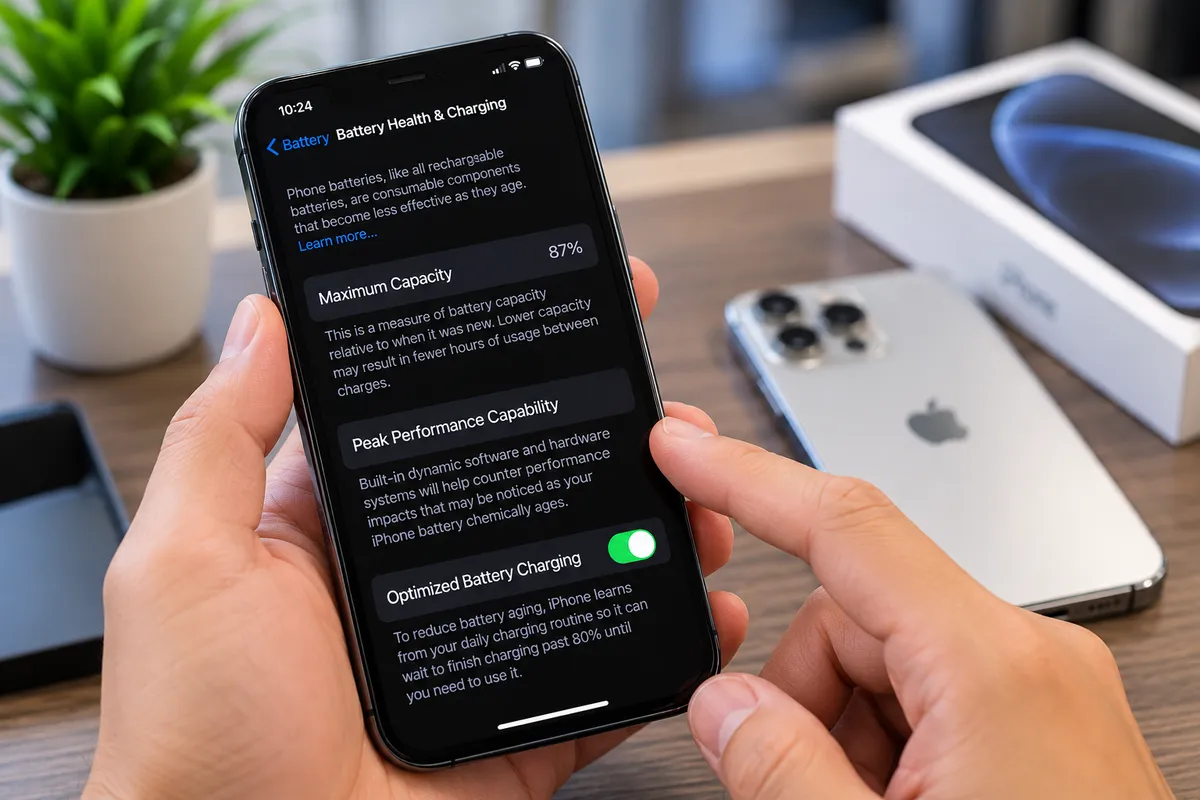
The Maximum Capacity figure in iPhone Battery Health estimates how much charge the battery can hold compared with when it was new. A reading of 90% means the battery is estimated to hold about 90% of its original capacity under similar conditions.
Battery capacity naturally declines as lithium-ion cells chemically age. A lower percentage does not automatically indicate a defective phone. It mainly helps you estimate how often the device may need charging.
Is 90% Battery Health Good for a Used iPhone?
Yes. Around 90% or higher is generally a strong result for a used iPhone, assuming the rest of the device is in good condition.
At this level, most buyers should still get solid everyday battery life, although actual runtime depends on the model, screen brightness, cellular signal, apps, camera use, gaming, and other habits.
A newer iPhone at 90% may still be a better purchase than an older model at 100% if the newer device offers longer software support and more years of useful life.
Is 85% Battery Health Still Acceptable?
An iPhone in the mid-to-high 80% range can still be a practical used-phone purchase. The key question is whether the price accounts for the battery's age.
At 85%, you may notice that the phone needs charging sooner than a new device, especially during heavy use. That does not necessarily mean the battery needs immediate replacement.
For a budget-focused buyer, 85% can be acceptable if the phone passes charging and performance tests and you are comfortable with a possible battery replacement later.
What About 80% Battery Health?
Around 80% is where the purchase decision deserves more caution. Apple currently states that iPhone 14 models and earlier are designed to retain about 80% of original capacity after 500 complete charge cycles under ideal conditions, while iPhone 15 models and later are designed around that same 80% level after 1,000 complete cycles.
That does not mean every battery must be replaced the moment it reaches 80%. It does mean the battery has experienced meaningful wear.
If you buy a used iPhone near 80%, treat battery replacement as a likely future expense rather than assuming the existing battery will provide new-phone runtime.
Battery Percentage Does Not Tell the Whole Story
Two iPhones showing the same battery-health percentage can behave differently. Temperature history, charging habits, age, internal resistance, software use, and previous repairs can affect real-world performance.
A phone at 88% that lasts through normal daily use may be a better purchase than a phone reporting 92% but shutting down unexpectedly or becoming unusually hot.
That is why an inspection should include actual charging, discharge behavior, heat, and overall performance rather than relying on one number.
Check for Battery Service or Important Battery Messages
Before buying, open the Battery settings and review any messages shown under Battery Health. If the iPhone recommends battery service, that should be included in your purchase decision.
Also pay attention to messages saying the phone cannot verify the battery. That information does not automatically make the phone unusable, but you should understand it before paying for the device.
Look at Cycle Count on Newer iPhones
On supported newer iPhones, Battery Health can also show cycle count, manufacture date, and first-use information. These details give useful context to the maximum-capacity percentage.
A charge cycle does not mean the phone was plugged in once. A full cycle represents a combined 100% of battery use over time. Cycle count is useful, but it should still be considered alongside real-world performance.
Check Whether the Battery Drains Normally
A used iPhone should not lose large amounts of charge while sitting idle for a short period. It also should not shut down unexpectedly at 20%, 30%, or another significant remaining percentage.
During an in-person inspection, use the phone for several minutes. Open the camera, browse menus, connect to Wi-Fi, and watch whether the battery percentage changes abnormally fast.
Sudden drops, random shutdowns, excessive heat, or charging instability may indicate a battery or electrical problem that deserves diagnosis.
Inspect for Swelling or Physical Battery Warning Signs
Battery health percentage does not reliably warn you about every physical battery problem. Inspect the phone for a display or back panel that appears to be lifting away from the frame.
A swollen lithium-ion battery can place pressure on the screen and internal components. Unusual heat, a chemical smell, or visible separation should be treated seriously.
Do not buy a phone with suspected swelling simply because the Battery Health screen still shows an acceptable percentage.
Consider the iPhone Model and Your Daily Use
Battery health needs are different for different buyers. Someone who mainly uses an iPhone for calls, messages, maps, and light browsing may be comfortable with a lower maximum capacity than someone who streams video, games, records content, or spends long days away from a charger.
The battery size and efficiency of the model also matter. A larger or newer iPhone at 85% may still deliver better runtime than an older, smaller model showing a higher percentage.
Think about how long you need the phone to last between charges rather than chasing the highest percentage available.
Should You Avoid Any Used iPhone Below 80%?
Not necessarily, but the price needs to make sense. A used iPhone below 80% can still have value if the device is otherwise healthy and you plan to replace the battery.
Moe-Bile Repair provides iPhone battery replacement and diagnostic services in Southgate, so battery condition can be addressed separately from the rest of the phone when repair is practical.
The mistake would be paying near top used-market value for a phone that is already close to needing battery service.
What Battery Health Should You Target When Buying Used?
As a practical buying guide, 90% or higher is excellent, the mid-to-high 80s are generally reasonable, and around 80% should be priced with expected battery replacement in mind.
Those ranges are not guarantees. Stable charging, normal temperature, a healthy display, working cameras, reliable Face ID or Touch ID, and clear account and carrier status are just as important.
A used iPhone should be judged as a complete device rather than by one Battery Health number.
Buying a Used iPhone in Southgate, MI
If you are shopping for a pre-owned iPhone, ask to see Battery Health before buying and compare the percentage with the phone's age, model, asking price, and expected use.
A lower battery percentage can be acceptable when the price leaves room for a future replacement. A high percentage is useful, but it should never distract from checking the rest of the device.
Moe-Bile Repair offers used iPhones and other quality pre-owned devices at its Southgate shop, along with diagnostics and repair services for common iPhone problems.
You can visit the Southgate location or contact Moe-Bile Repair to ask about current used-device options, battery condition, or whether a battery replacement makes sense before or after purchase.
